Define the fountain before comparing quotations
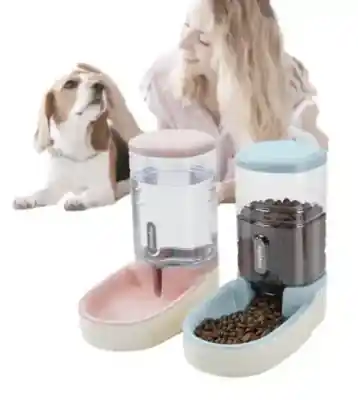
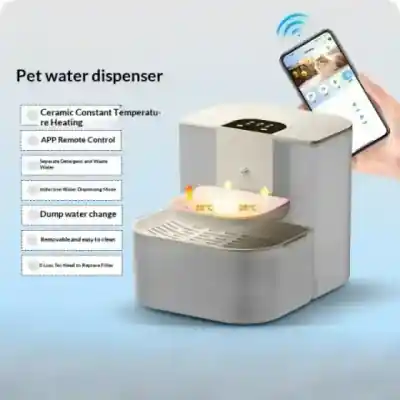
A smart pet water fountain is not one standard product. A gravity dispenser, a continuously circulating fountain, a sensor-activated model and a battery-powered wireless fountain have different components, failure modes and compliance questions. Begin with the buyer’s use case, destination market and sales channel before asking factories for prices.
Write a product brief that names the intended pet type, usable water capacity, refill interval, indoor setting, preferred material, flow mode, power source, noise expectations, cleaning method and replacement-filter strategy. State whether app control, motion sensing, battery operation or water-level indication is genuinely required. Every added function introduces components that must be specified, tested, explained and supported.
Send the same brief to each candidate supplier and require answers against identical fields. A comparable quotation should identify the exact model, water-contact parts, pump or valve, filter system, electrical input, battery details where applicable, included accessories, retail pack, MOQ, sample terms and open questions. Catalog photographs cannot replace this record.
- Destination market and sales channel
- Pet type, household use and usable capacity
- Flow mode, pump control and power source
- Water-contact materials and replaceable parts
- Branding, packaging, quantity and launch date
Separate claimed capacity from usable capacity
Fountain listings often lead with a headline tank volume, but the useful operating range may be smaller. Ask the supplier to define total container volume, maximum fill line, minimum operating level and the amount of water remaining when the low-water protection or indicator activates. Record how these values are measured on the production model.
The reservoir, drinking tray and pump chamber may hold water at different times. A buyer should understand the flow path from reservoir to drinking surface and back, including any zones that are difficult to drain or clean. For multi-pet positioning, avoid turning capacity alone into a usage-duration claim because consumption varies by animal, climate and household.
Review dimensions together with capacity. A taller reservoir can alter stability; a wide drinking surface can increase evaporation or contamination exposure; a compact pump chamber may be harder to access. Compare assembled footprint, filled weight, cable position and the space needed to remove the tank or top cover.
Map every water-contact material
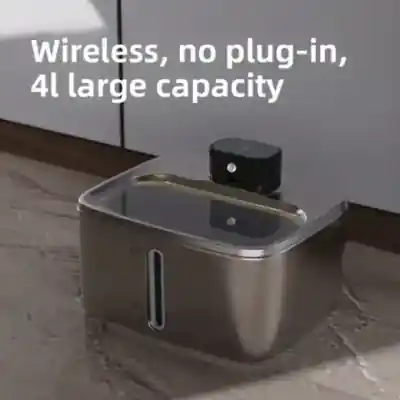
Create a component list for every part that contacts drinking water: reservoir, tray, spout, pump housing, tubing, seals, filter media, adhesives and any coating. Terms such as stainless steel, ceramic or food grade are too broad on their own. Record the agreed material grade or supplier declaration, surface finish, color and component source where relevant to the buyer’s program.
The European Commission explains that food-contact materials include containers and tableware and that constituents transferring from those materials can affect chemical safety, taste, smell and appearance. The exact legal route for a pet fountain depends on the market and product, so buyers should obtain qualified advice rather than assume that a generic statement covers the finished SKU.
Ask what documentation supports the selected material and intended conditions of use. A report for another color, resin, coating or component should not be treated as automatic evidence. If migration or other testing is required, confirm the sample identity, preparation, contact conditions, laboratory scope and document validity before production.
Material verification does not replace workmanship review. Check ceramic surfaces for chips, cracks and glaze defects; steel parts for sharp edges, burrs and finish consistency; plastic parts for molding defects, odor and inaccessible crevices. The accepted sample should show the final combination of materials and finishes.
Build the compliance file around the exact water-contact components in the approved fountain, not around a generic material claim.
Specify the pump, flow path and low-water behavior
The pump is central to user experience and product reliability. Record its model or controlled specification, rated input, flow range, mounting method, cable or connector, expected operating mode and replacement route. If the pump is custom-labeled, retain a cross-reference to the underlying approved component so production substitutions cannot occur without review.
Define the intended water flow at the drinking surface. A buyer may compare stream height, tray coverage, splash behavior and adjustment settings, but the method needs a fixed fill level, voltage, filter condition and assembly configuration. A video can document operation, yet it should not be the only acceptance reference.
Low-water behavior deserves its own test. Confirm whether the product stops, changes indication, continues running or requires manual reset. Define the water level and timing used for the check. Refill the unit and verify recovery. Do not advertise dry-run protection until the actual function and limits have been validated for the selected model.
Inspect the complete water circuit for leaks, loose tubing, poor seals and trapped areas. Run the assembled sample long enough to observe connections, splashing, vibration and water returning to the reservoir. The duration and acceptance criteria should be agreed by qualified technical personnel for the project.
Treat filters as a supply program, not an accessory
A filter changes flow resistance, maintenance and repeat-purchase expectations. Specify every layer or medium, dimensions, orientation and installation method. Confirm whether pre-rinsing is required, how the customer identifies the correct side and whether the pump has a separate pre-filter or sponge.
Replacement frequency cannot be presented as one universal number without conditions. Water quality, pet hair, household dust, number of animals and cleaning habits all affect service life. Instructions should explain inspection and replacement in practical terms without unsupported hygiene or health promises.
For wholesale programs, decide how replacement filters will be sold and identified. Record the filter SKU, pack quantity, barcode information, artwork, carton data and forecast. Confirm whether future production is compatible with the approved fountain and whether component changes require notice. A fountain without a realistic replenishment route can create customer complaints even if the initial unit performs well.
Inspection should verify filter count, fit, orientation and packaging. If activated carbon, resin or another medium is claimed, request product-specific supporting information from the supply chain. Avoid medical, purification or contaminant-removal claims unless they are lawful and supported for the final configuration.
- Filter construction and dimensions
- Installation direction and pre-rinse instructions
- Replacement SKU and pack quantity
- Compatibility and change-control process
- Claims supported for the final filter configuration
Control power, charging and battery options
Separate the fountain’s input from the supplied power accessories. Record rated voltage and current, connector type, cable length, adapter model where included and plug option for each destination. For USB-powered models, confirm whether the retail pack includes only a cable or also an adapter. Artwork, instructions and quotation must agree.
For electrical and electronic products sold in the EU, the European Commission’s RoHS page explains that the directive restricts hazardous substances in electrical and electronic equipment. Applicability and the broader conformity route depend on the final product and accessories. Buyers should identify the responsible economic operators, applicable legislation, technical documentation, markings and test scope with qualified specialists.
Battery-powered fountains add cell chemistry, capacity, charging, battery-management and shipment questions. Record whether the battery is built in or removable and confirm the exact cell or pack used in the production sample. IATA’s 2026 battery guidance discusses transport requirements and UN 38.3 testing for lithium battery designs. The logistics provider should confirm classification, documents, packaging and route for the actual shipment.
Do not assume that a charger or battery document from a similar model covers the selected SKU. Keep component identity, reports and declarations connected to the production bill of materials. Any substitution after testing needs a controlled review.
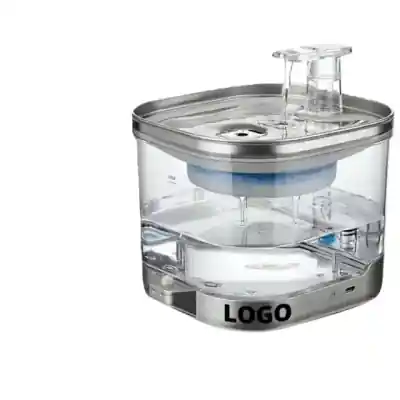
Make cleaning a design requirement
Cleaning should be evaluated before branding and packaging are frozen. Ask a reviewer unfamiliar with the product to disassemble, wash and reassemble it using only the supplied instructions. Record the sequence, tools needed, small removable parts, areas that retain water and components that must not be immersed.
Check whether the reservoir, tray, lid, pump cover, impeller area, tubing and filter chamber can be reached. Tight corners, decorative channels and hidden cable routes may look attractive but increase maintenance difficulty. If a dishwasher claim is proposed, identify exactly which parts and settings are covered and obtain appropriate evidence.
Instructions should distinguish routine water replacement, cleaning and filter maintenance. Use diagrams that match the final components. Include safe handling of electrical parts and a clear reassembly path. Translation, symbols and warnings need market-specific review; do not copy instructions from another fountain.
Cleaning-related observations belong in sample approval and inspection. Verify that parts fit without force, seals return to the correct position and the assembled unit operates without leaks. Include one complete set of final instructions in the inspection pack.
- Tool-free access where the design requires it
- Pump and impeller cleaning path
- Non-immersible electrical parts identified
- Filter and seal orientation explained
- Final instructions matched to production components
Define measurable quality and performance checks
Words such as quiet, leakproof and long-lasting are not inspection methods. Convert each important claim into a controlled check with setup, equipment, duration and acceptance criteria. Noise depends on distance, room background, water level, filter condition and product placement. Leakage checks depend on fill level, assembly and observation time.
A practical project plan may include capacity and fill-line verification, continuous operation observation, low-water response, pump restart, indicator behavior, charging, button or sensor response, connector retention, cable and housing workmanship, leak inspection and dimensional checks. The exact methods and values should match the model and intended market.
For sensor or app-connected models, define trigger range, delay, pairing, account requirements, permissions, supported operating systems and behavior after network or power loss. Cybersecurity and software-support obligations may apply to connected products, so buyers should obtain current specialist advice before selecting this feature.
Keep engineering validation separate from lot inspection. Development tests establish whether the design can meet the requirement; production inspection checks whether sampled units match the approved design and function. One does not replace the other.
Approve the method before production; otherwise buyer, factory and inspector may each interpret the same performance claim differently.
Build the production inspection pack
Combine the approved sample, bill of materials, component references, specification, artwork, instructions, packaging standard, SKU quantities and test methods in one controlled pack. Classify defects by safety, function, appearance, marking and packaging. Include photographs or clear examples for findings that are difficult to describe.
Incoming units should be identified by model, color, plug or cable option and filter pack. Check assembly, surfaces, water-contact parts, included accessories and retail-pack contents before functional testing. A dry visual inspection alone cannot confirm operation; a water test requires a plan for setup, drying and repacking.
ISO 2859-1:2026 defines AQL-indexed sampling schemes for lot-by-lot inspection by attributes. Qualified quality personnel should select the applicable sampling plan, inspection level and acceptance criteria. AQL does not establish product safety, prove lifetime or replace defined functional tests.
Allow time after inspection for correction and recheck. Findings should record the exact SKU, sample size, defect quantities, photographs and disposition. Water-tested units must be identified and handled according to the agreed packing process so moisture is not sealed into retail packaging.
- Model, color, power option and quantity
- Water-contact parts and surface workmanship
- Pump, flow and low-water operation
- Controls, indicators, charging or sensors
- Filter, accessories, labels and instructions
- Retail pack, carton data and post-test drying
Approve packaging with the final configuration
Packaging must protect ceramic, steel or plastic surfaces while controlling movement of the pump, adapter, cable and filter packs. Create a packing diagram showing every component and protective layer. Keep electrical accessories separated from wettable parts and prevent hardware from scratching finished surfaces.
Confirm retail-pack dimensions and gross weight from the approved packed unit. For parcel distribution, agree an appropriate distribution test with packaging specialists based on the route and product fragility. Ceramic reservoirs, removable lids and exposed spouts may need different protection from molded plastic fountains.
Artwork should state the correct capacity basis, material description, included components, electrical ratings, model identity and responsible-party information required for the target market. Review every icon and claim. Product photographs must show the final configuration and should not imply app, sensor or battery functions that are not included.
Master-carton quantity, dimensions, weight, shipping marks and pallet pattern affect logistics and need production confirmation. Battery-containing models require shipment planning early enough to avoid a late change in transport route or documents.

Compare suppliers on lifecycle readiness
A complete quotation should cover the exact fountain, water-contact components, pump, filter, power accessories, battery where applicable, customization, retail packaging, replacement parts, sample terms, MOQ and production schedule. Mark estimates and exclusions. A lower price may omit an adapter, filter pack, spare pump or protective packaging.
Ask how component changes are controlled and communicated. Pumps, cells, adapters and filter media may come from sub-suppliers; unreviewed substitutions can invalidate performance checks or documentation. Record the approved component references and the process for evaluating alternatives.
Consider after-sales needs before the first order. Decide whether pumps, filters, cables, trays or seals will be stocked separately and how buyers identify compatible parts. Confirm the responsible party for instructions, warranty terms and market-specific product support.
NCIPET can coordinate product matching, partner-factory communication, sampling, production follow-up, dedicated inspection and delivery preparation. Product availability, price, MOQ, customization, documentation and lead time are confirmed for each selected model and destination.
- Exact bill of materials and included accessories
- Evidence and documentation for the final SKU
- Replacement filters and service parts
- Change control for critical components
- Production, inspection and delivery milestones
Buyer checklist before placing an order
Use this checklist as a decision record. Every approved answer should point to a specification, sample, component reference, report, artwork file, test method, inspection plan or logistics confirmation.
- Are usable capacity and operating water levels defined?
- Are all water-contact materials and components listed?
- Is the pump, flow path and low-water behavior specified?
- Is there a realistic replacement-filter program?
- Are cable, adapter, plug and battery options controlled?
- Can the product be cleaned and reassembled from the instructions?
- Are performance claims tied to agreed test methods?
- Are market requirements assigned to qualified owners?
- Does packaging protect every component and reflect the final SKU?
- Are correction, recheck and shipment steps scheduled?
Frequently asked questions
What should a smart pet water fountain quotation include? Request the exact model, usable capacity, water-contact materials, pump, filter, power input, included cable or adapter, battery details, accessories, branding, packaging, MOQ, sample terms, production timing and exclusions.
Is stainless steel automatically better than plastic or ceramic? No material name proves the quality of the finished fountain. Review the exact grade or composition, surface, manufacturing quality, documentation, cleanability and complete product design for the intended market.
Can one test report cover every fountain in a range? Not automatically. Match the report’s product, materials, components, electrical configuration, test method and date to each final SKU with qualified specialists.
How should buyers compare fountain noise? Use the same filled product, filter condition, power source, surface, room background, distance and measurement method. Avoid comparing unsupported supplier labels such as ultra quiet.
When should replacement filters be ordered? Confirm compatibility, pack design, identifiers, production lead time and forecast before launching the fountain. The replenishment plan should be ready with the initial product program.