
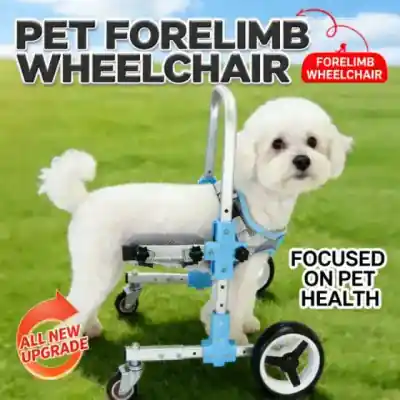
Treat the product as mobility support equipment
A dog wheelchair is an assistive mobility product, not a promise to treat or cure a disease. Buyers should define the intended support, user group and retail channel without making unsupported rehabilitation claims. Product copy should explain structure, adjustment, fitting and supervised use. End users should be advised to consult a veterinarian or qualified animal rehabilitation professional before selecting or using a mobility aid, especially when the animal has pain, wounds, changing strength or a diagnosed condition.
The U.S. FDA explains that animal devices are distinguished from drugs by how they work and that devices intended for animal use remain subject to oversight against adulteration or misbranding. Requirements and commercial claims vary by market. Importers and brands should obtain current advice for their intended use, labeling and destination rather than relying on a generic certificate or assuming that a pet accessory has no regulatory considerations.
This guide covers sourcing and quality coordination. It is not veterinary advice, and the products described do not claim a medical outcome.
Distinguish rear, front and full support
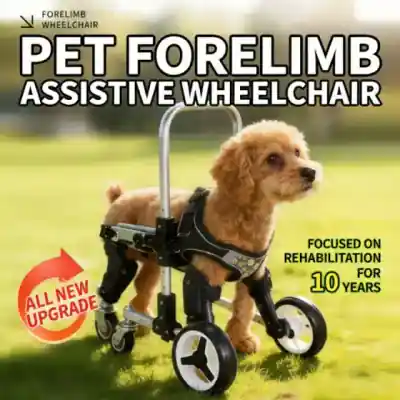
Rear-support dog wheelchairs carry or stabilize the hindquarters while the front legs provide propulsion. Front-support designs address a different movement pattern and need their own frame and harness geometry. Full-support or four-wheel systems distribute support across front and rear sections and can require more adjustment points. A convertible frame may serve more than one configuration, but the quotation must identify which parts and harnesses are included rather than presenting every possible mode as standard.
Ask the supplier to provide a component diagram for each version: frame, crossbars, leg rings or slings, chest harness, belly support, wheels, axles, connectors, straps, buckles and tools. Record which components contact the animal and which are load-bearing. A product suitable for a small, narrow-bodied dog cannot simply be scaled by extending one bar for a taller or heavier animal. Geometry, balance, wheel position and harness fit interact.
- Rear support for hind-limb assistance
- Front support for forelimb assistance
- Full or four-wheel support
- Convertible configurations with identified parts
- Accessories and replacement harness components
Build a complete sizing specification
A useful dog wheelchair sizing guide defines every measurement with a drawing and a consistent animal position. Typical fields may include standing height at the rear or front, body length, body width, chest or girth measurement and weight range. The correct fields depend on the frame. State whether measurements are taken while standing square, with assistance, and from which anatomical reference points. Avoid ambiguous labels such as height or length without a diagram.
Create a size chart that links measurements to the actual adjustable ranges of the production model. Record minimum and maximum frame width, height and length, wheel diameter, harness adjustment and any overlap between sizes. The animal’s weight is helpful but cannot replace body measurements. Two dogs of the same weight can have very different proportions. Retail instructions should explain what to do when measurements cross sizes and direct uncertain users to professional fitting advice.
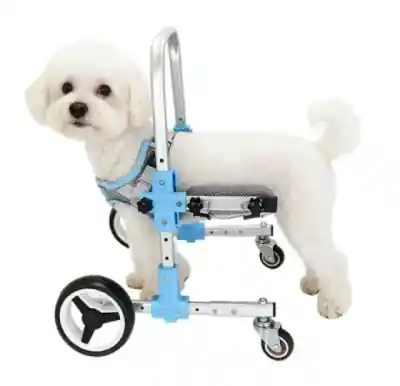
Adjustment cannot compensate for the wrong size
Telescoping bars and adjustable straps make fitting more flexible, but they do not create unlimited compatibility. At the extremes of adjustment, a frame can lose stiffness, place wheels incorrectly or leave too much loose strap. Require the supplier to state usable—not only mechanical—adjustment limits. Check whether fasteners remain fully engaged, whether both sides can be set symmetrically and whether adjustment marks are clear enough for repeat setup.
During sample review, assemble the smallest and largest intended configuration. Inspect joint overlap, play, fastener access, wheel clearance and harness position. Confirm that the frame remains balanced on a level surface without twisting. If several wheel sizes or support slings are offered, treat each as a controlled configuration. The product page should not imply that one size fits all dogs merely because the frame is described as adjustable.
The selected size must fit the individual animal; adjustability is a fine-tuning tool, not a substitute for correct selection.
Inspect the frame and structural connections
Record the frame material, tube dimensions, wall thickness, finish and connection method when those facts are available. Check cut ends, drilled holes, telescoping surfaces and welds or molded joints for burrs, cracks, sharp edges and inconsistent finish. Load paths should transfer through secured connections rather than through decorative covers or loose straps. Fasteners should be appropriate for repeated assembly and adjustment, and users should be able to recognize when a joint is locked.
Create an assembly torque or securement method where relevant and define what inspectors can verify without damaging the product. Repeatedly fold and unfold a foldable model, then inspect hinges, locks and alignment. A lightweight claim should not become an excuse for flex, loose joints or unstable wheel tracking. For wholesale production, incoming frame and hardware checks can reduce variation before final assembly.
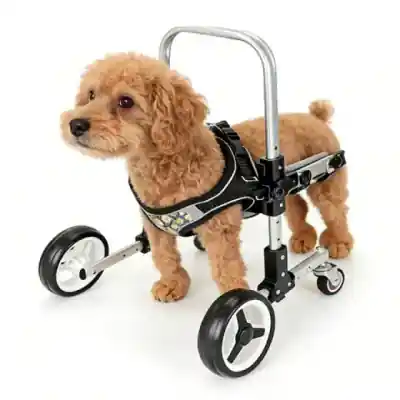
Review wheels, axles and ground contact
Wheel diameter, width, tread, bearing or bushing design and axle retention affect rolling behaviour. Ask which surfaces the product is intended for and avoid unsupported all-terrain claims. Inspect wheel wobble, rubbing, fastener security, side play and tracking. Roll the assembled sample forward, backward and through gentle turns on representative safe surfaces while checking whether the frame stays aligned. This is a product-function review, not a substitute for veterinary fitting.
Confirm how wheels and axles are removed, whether tools are included and which spare parts are available. Small clips or caps need secure retention and clear instructions. Packaging should prevent axles from bending and finished wheels from rubbing against frame parts. If pneumatic, foam or molded wheels are offered, each option may change weight, dimensions and maintenance. Keep the selected wheel specification tied to the SKU and retail artwork.
- Wheel size and tread
- Axle and retention hardware
- Tracking and side play
- Surface-use limitations
- Replacement wheels and small fasteners
Control straps, harnesses and contact materials
Every part touching the animal should be identified by material, construction and adjustment range where confirmed. Review strap width, stitching, edge finish, buckle operation, hook-and-loop coverage, padding and ease of cleaning. Contact surfaces should not have exposed rough seams or hardware. A soft appearance is not enough; the harness must remain positioned in the intended configuration without creating loose loops or pressure from narrow edges.
Ask for a diagram showing where each strap belongs and how much tail should remain after adjustment. Repeatedly open and close buckles or fasteners during sample validation. Wash removable textile parts according to the proposed instructions and check shrinkage, distortion, color transfer and reassembly. Any skin-friendly, hypoallergenic or therapeutic material claim needs suitable support; otherwise use factual descriptions of material and construction.
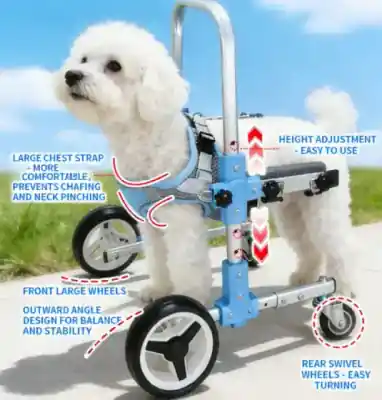
Document sample fitting feedback responsibly
A sample fitting record should capture product size, frame settings, wheel option, strap positions, assembly observations and the reviewer’s non-medical usability notes. Photographs from agreed angles can help show alignment, but protect personal and owner information. Do not turn one animal’s experience into a universal outcome or customer success claim. If discomfort, rubbing, instability or unusual movement is observed, stop the session and refer the user to a veterinarian or qualified professional.
Use feedback to improve instructions and product configuration: confusing measurement labels, inaccessible fasteners, strap tails, wheel interference or difficult cleaning. Record every change by sample version. The final production reference should be the version that incorporates approved corrections. A photograph of a fitted sample does not replace a dimensional drawing or controlled component list.
Fitting feedback should improve product instructions and configuration; it must not be presented as proof of treatment or recovery.
Design clear instructions and packaging
The retail pack should protect long frame members, wheels, axles, buckles and finish during parcel handling. Use an internal arrangement that prevents heavy parts from moving against textile components. Confirm pack dimensions and gross weight from the final configuration, including tools, spare hardware and instructions. If the frame ships partly assembled, label the left and right parts and make the first assembly sequence easy to follow.
Instructions should cover package contents, measurement, size selection, assembly, symmetric adjustment, fitting sequence, supervised introduction, cleaning, maintenance, fastener checks, storage and when to stop using the product. Diagrams must match the production parts. Add a clear non-medical statement and advise consultation with a veterinarian or qualified rehabilitation professional. Market language, responsible-party information and required warnings need destination-specific review.
- Illustrated package contents
- Measurement and size chart
- Assembly and symmetric adjustment
- Fitting and supervised use
- Cleaning, inspection and replacement parts
- Non-medical statement and professional advice
Plan OEM and private-label options
Private label dog wheelchair work may include logo position, frame color, textile color, packaging, instructions, measurement guides and spare-part packs. Confirm which options apply to the selected size range and MOQ. A color change can affect coatings or textiles; new branding can affect traceability and responsible-party information. Approve physical or production-representative samples rather than artwork alone.
ODM changes to geometry, folding mechanisms, harness construction or wheel systems need engineering ownership and validation. Define drawings, tolerances, tooling, prototypes and change control. Clarify who owns new designs and replacement-part compatibility. The quotation should separate unit price, sample charges, tooling, packaging development and any testing or documentation work. NCIPET coordinates the selected manufacturing resources and keeps sample, specification, production and inspection information connected.
Avoid common bulk-purchase mistakes
The first mistake is ordering by animal weight alone. The second is accepting a wide adjustment claim without checking usable geometry. Others include combining incompatible wheels and frames, approving photographs rather than a physical sample, omitting small hardware from package-content checks, and writing medical benefits that the product cannot substantiate. Buyers also underestimate spare straps, clips and wheels, creating avoidable after-sales replacements of complete units.
Use one SKU matrix for size, support type, color, wheel option, included harness and pack. Keep each barcode and carton quantity connected to that matrix. Require written confirmation when a factory changes frame tube, wheel supplier, buckle, textile or fastener. Do not allow an unapproved substitution simply because the product still resembles the sample.
- Weight-only size selection
- Unverified adjustment extremes
- Mixed or unlabeled configurations
- Missing small parts or tools
- No spare-part program
- Unsupported medical or recovery claims
Build a practical quality inspection plan
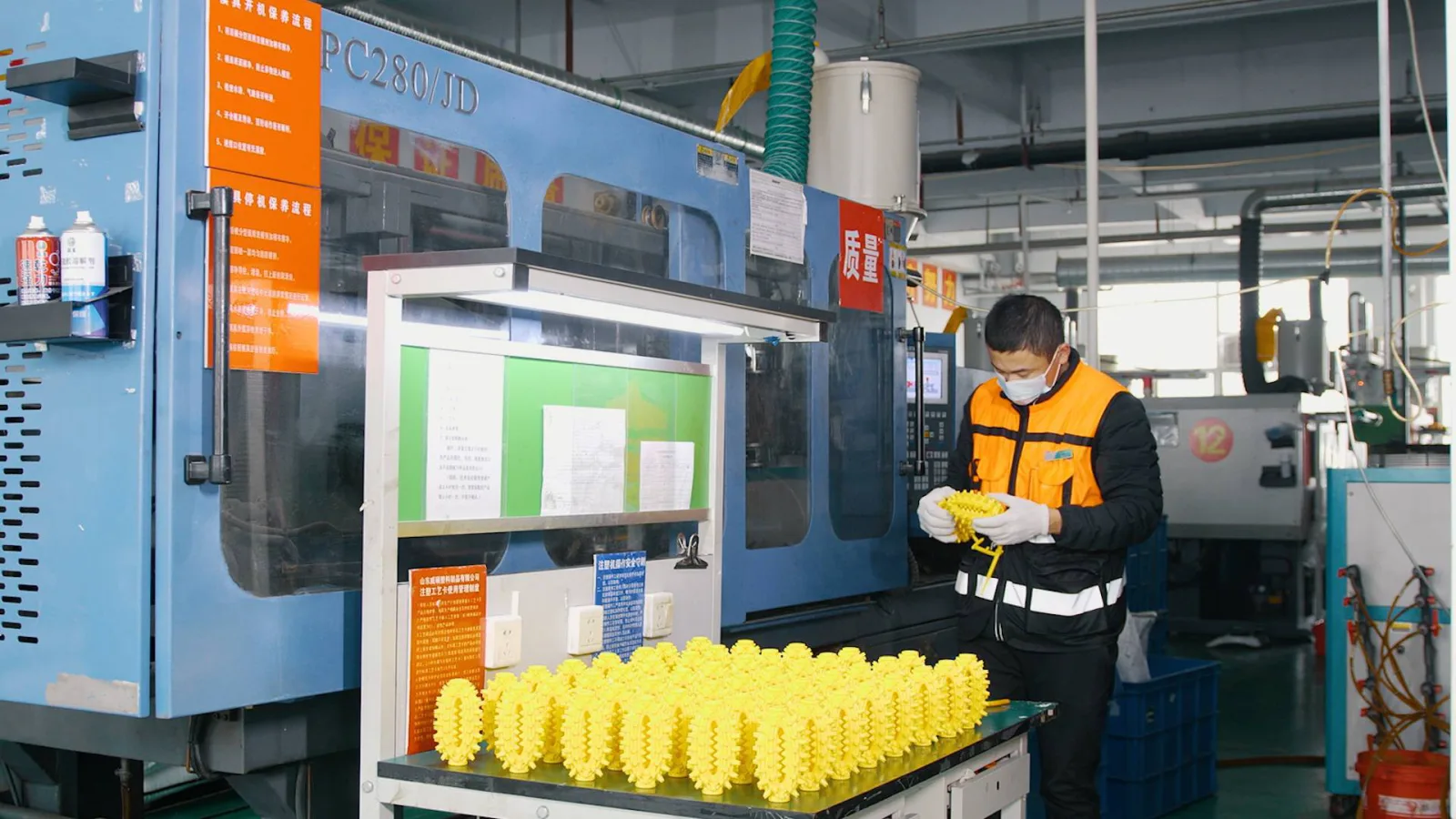
Incoming checks can cover frame pieces, wheels, axles, fasteners, buckles, straps and padding against approved references. In-process checks should verify orientation, secure joints, symmetric adjustment, stitch quality and identification. Finished-product checks should cover package contents, assembly, dimensions, adjustment range, folding, wheel rotation, tracking, fastener engagement, sharp edges, finish and instructions. The scope and acceptance criteria should be agreed before production.
For pre-shipment inspection, sample by exact SKU and size rather than treating all cartons as interchangeable. ISO 2859-1 provides AQL-indexed sampling schemes for inspection by attributes; qualified quality personnel should select the plan. Critical safety or structural concerns may require specific coverage beyond a general sample. Record model, lot, sample size, methods, defect quantities, photographs and disposition. Leave time for correction and recheck before dispatch.
Distributor assortment and spare-part planning
A distributor can build a focused range by support type and verified size coverage rather than listing many visually similar frames. Start with the measurement needs of the target market, staff ability to explain sizing and realistic stock depth. Pair each main SKU with compatible replacement straps, wheels, clips and hardware. Keep a display or training sample for staff and produce a simple measurement form that can be saved with the order.
Track returns by reason: measurement error, assembly confusion, missing part, fit concern, component damage or expectation mismatch. This information improves product selection, instructions and stock planning. It should not be used to claim clinical outcomes. Ask the manufacturing partner how long matching parts will remain available and how design changes will be communicated.
- Support type and size coverage
- Staff measurement guide
- Compatible spare-part packs
- Training or display sample
- Return-reason and issue tracking
Buyer checklist before order confirmation
Confirm the support type, intended pet range, measurement diagram, size chart, actual adjustment limits, frame and wheel configuration, contact materials, package contents, instructions and spare parts. Match the approved sample to the SKU matrix, artwork and carton. Keep unconfirmed material or performance fields open instead of filling them with assumptions. Review intended claims and destination requirements with qualified advisers.
Ask for a written quotation tied to quantity, customization, sample terms, packaging and destination. Confirm production milestones and pre-shipment inspection. For the current NCIPET owner-supplied model, the verified source information supports a lightweight, retractable and foldable rear-support configuration, one-piece MOQ, a reference price range, package size and package weight; detailed size range, pet weight range, frame material and accessories remain to be confirmed before an order.
- Exact support type and product size
- Defined body-measurement fields
- Usable frame and harness adjustment
- Approved wheel, frame and strap components
- Package contents and spare parts
- Inspection methods and shipment data
Frequently asked questions
Can one adjustable frame fit every dog? No. Adjustment works within a defined geometry. Correct measurement and professional advice remain important.
Is a dog wheelchair a treatment? No. It is mobility support equipment. Product information should avoid cure or recovery claims, and end users should consult a veterinarian or qualified animal rehabilitation professional.
What should be included with a wholesale sample? The exact frame, wheels, harnesses, fasteners, tools, instructions and retail packing proposed for the order, plus a configuration and size record.
Which parts should be stocked? That depends on the model, but wheels, straps, clips, fasteners and contact textiles are practical candidates when they are replaceable.
How does NCIPET support dog wheelchair sourcing? NCIPET coordinates product information, samples, customization, partner-factory communication, production follow-up, dedicated inspection, packing and global delivery for the confirmed project.
Discuss your dog wheelchair sourcing project
Send the target support type, destination market, expected quantity, size coverage, branding and packaging needs. If you already use a measurement chart, include it for comparison. The NCIPET team will identify which fields are confirmed by the current source and which require factory verification, sampling or specialist review before a written quotation.