

Begin with the selling proposition and use case
A leash specification should start with the customer and the way the product will be used, not with a generic request for nylon or a supplier’s most popular model. A compact city lead, a long training line, a hands-free running leash and a retractable leash solve different problems. They also create different requirements for length, width, grip, hardware, packaging and instructions.
Write one commercial brief before comparing products. Define the destination market, retail channel, intended dog-size range, use case, target retail position, order quantity and branding scope. State whether the product will be sold individually, in a collar-and-leash set or as part of a broader walking range. Mark every requirement as fixed, preferred or still open.
Send the same brief to each candidate manufacturing resource. A comparable response should identify the exact model, material construction, dimensions, color range, hardware finish, packing method, MOQ, sample terms and unconfirmed points. This makes it easier to compare commercial fit rather than choosing from photographs alone.
- Target customer, dog-size range and use case
- Sales channel and expected retail position
- Leash type, finished length and width
- Branding, color and packaging scope
- Sample date, order quantity and launch window
Compare materials as complete constructions
Material names are only the starting point. Nylon webbing can be smooth, tubular, flat or woven with reflective yarn; polyester can vary in weave, thickness and color performance; rope leads combine a core, outer braid, stitching or splices, handle padding and end fittings. Coated webbing may be selected for cleanability, but the coating, substrate and edge finish still need to be specified.
Ask for the finished construction, not only the fiber name. Record width, thickness or diameter, layers, weave or braid, surface treatment, handle structure and how the ends are secured. If comfort is part of the sales claim, define the grip material and dimensions and review it on a physical sample. If weather resistance or easy cleaning is important, agree a product-specific method for checking it rather than relying on an undefined label such as waterproof.
Material selection should follow the commercial brief. A lightweight lead for a small dog may prioritize low hardware weight and a soft hand feel. A training line may prioritize controlled handling, abrasion behavior and a surface that can be cleaned. There is no single best material for every leash; the buyer needs evidence that the chosen construction fits the intended use.
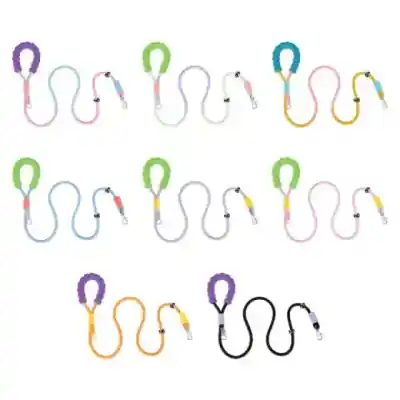
Specify every hardware component
Hooks, rings, sliders, rivets and buckles affect both function and perceived quality. The specification should identify each component’s material, finish, size, opening mechanism and connection to the leash. A color description such as black or silver is not enough when plating, coating, gloss and shade must remain consistent across a set.
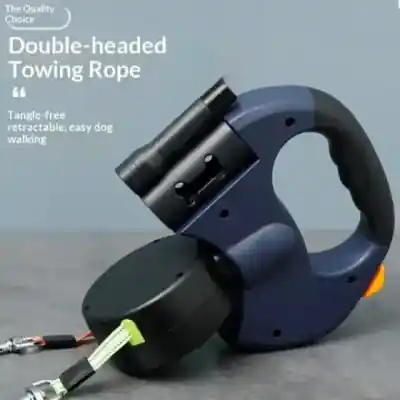
Review the hook in the intended orientation. Check the opening clearance, spring action, rotation where a swivel is used, edges that contact the hand or animal and the way the hook is attached to the webbing or rope. For adjustable or hands-free products, trace the load path through every ring, slider and buckle. For retractable models, treat the housing, lock, return mechanism, cord or tape and attachment point as separate functional elements.
Avoid turning a supplier’s component claim into a universal strength claim. Any load, cycle, corrosion or durability method needs an agreed setup, sample conditioning, measurement, acceptance value and responsible reviewer for the selected model. Safety-critical decisions should be confirmed with qualified technical and compliance specialists.
A finished leash is a system: the weakest connection can matter more than the nominal strength of the webbing.
Turn dimensions into controlled specifications
Finished length should be measured consistently, with the measuring points stated in the specification. Buyers also need the webbing width or rope diameter, handle opening, adjustment range and relevant hardware dimensions. When several sizes are offered, record the measurements for every SKU rather than applying one value to an entire range.
Tolerances should reflect function and manufacturing reality. An unexplained ‘approximately’ creates disputes, while an unnecessarily tight tolerance can add cost without improving the customer experience. Agree which dimensions are critical, how they will be measured and what variation is acceptable before production.
Color requires the same discipline. Use an approved physical sample or defined color reference where consistency matters. Note that different fibers, coatings, rubber parts and metal finishes can show the same color differently. Review the complete assembled product under agreed lighting instead of approving each component in isolation.
- Finished length and defined measuring points
- Webbing width, thickness or rope diameter
- Handle opening and padding dimensions
- Adjustment range and hardware dimensions
- Size-specific tolerances and color references
Engineer seams and connection points
The transition from flexible material to rigid hardware is a critical construction area. Record the fold pattern, stitch layout, thread type or agreed description, stitch position and any reinforcement. For rope products, define whether the connection is stitched, spliced, knotted or covered and how the end is finished. For riveted details, specify quantity, position and surface finish.
A sample review should look for skipped stitches, loose thread ends, uneven folds, sharp edges, exposed reinforcement, adhesive marks and hardware that twists the material. Pulling hard on one sample is not a reproducible test. If connection strength matters to the project, define a controlled method and acceptance criteria appropriate to the product and intended use.
Changes that seem cosmetic can affect construction. A larger logo patch may cover stitching, a different handle pad can alter fold thickness, and a new metal finish may require a different component source. Reconfirm the production specification after customization rather than assuming that the base model remains unchanged.
Plan private-label customization in stages
Separate low-complexity branding from product development. An existing leash with an approved logo method and standard color may move through sampling differently from a project changing webbing construction, hardware, handle shape or function. Define the boundary early so quotation, sample timing and tooling discussions refer to the same scope.
Create an artwork pack with the brand file, logo dimensions, position, color reference and application method. Common options may include a woven label, rubber or silicone patch, printed logo, metal badge, engraved hardware or branded packaging, but availability and suitability must be confirmed for the selected product. Review legibility, attachment and appearance on the actual material.
Control revisions with clear version numbers. Record which sample, artwork and component finish are approved, what remains open and who has authority to release production. When a matching collar, harness or waste-bag holder is included, use one range-level color and branding sheet while keeping product-specific construction files.
- Base model and allowed structural changes
- Logo file, size, position and application method
- Approved color and hardware finish
- Packaging artwork and language
- Sample version and production-release record
Connect packaging to retail and logistics
Packaging has to protect the leash, present the brand and carry the information required for the destination and sales channel. Define whether the product uses a belly band, hangtag, box, pouch or another format. Confirm how the leash is folded or restrained, how hardware is prevented from scratching coated surfaces and how the package will hang, stack or ship.
Give every sellable variation a controlled SKU record. GS1 explains that barcodes encode identifiers such as the GTIN and support automatic identification through supply chains. The buyer should determine the identifier and barcode requirements with its GS1 member organization and retail partners, then provide verified data for artwork. The factory should not invent retail identifiers.
Confirm retail-pack dimensions and weight from the approved packing method. Master-carton quantity, carton dimensions, gross weight, shipping marks and assortment rules should be checked again on production goods. A change in handle shape, hanger or package can change carton efficiency, so logistics data should remain provisional until packing is verified.
Address market requirements product by product
Market compliance cannot be reduced to one generic certificate. Product design, materials, claims, packaging, destination and the buyer’s role all affect the questions that need to be answered. The European Commission describes the General Product Safety Regulation as the framework intended to ensure that only safe products are available on the EU market. Buyers should determine the applicable obligations and required product information for their actual offer.
Material information also needs a defined scope. ECHA notes that inclusion of a substance on the REACH Candidate List can trigger legal obligations for producers, importers and suppliers of articles containing that substance. A buyer should identify the product and components covered, request current supply-chain information and agree who will arrange any necessary assessment or testing. A report for a different material, color or model should not be treated as automatic evidence.
Claims such as reflective, recycled, antibacterial, heavy duty or suitable for a particular activity require evidence appropriate to the claim and market. This guide is a procurement framework, not legal advice. Confirm applicable requirements with qualified compliance professionals before production and sale.
Ask which requirement applies to this exact SKU, material, claim and destination—not whether the supplier has a generic certificate.
Build an inspection plan around the approved sample
The inspection pack should combine the approved sample, specification, component and color references, artwork, packaging files, SKU quantities and agreed test methods. Divide checks into identity, dimensions, workmanship, function, marking and packaging. Write defect examples that the buyer, factory and inspector can interpret consistently.
Practical checks may include SKU and quantity verification; finished length and width; color and logo position; hook opening, swivel and lock operation; adjustment movement; stitching and folds; sharp edges; packing contents; barcode data and carton markings. Retractable mechanisms or other special functions need their own defined checks. Do not substitute a generic checklist for the risks of the selected model.
ISO 2859-1:2026 describes AQL-indexed sampling schemes for lot-by-lot inspection by attributes. If acceptance sampling is used, qualified quality personnel should select the plan, inspection level and defect criteria for the order. AQL does not prove that every unit is defect-free, and it does not replace product-specific functional or safety testing.
Leave time between inspection and dispatch. Findings should record the product ID, sample size, observed quantity, photographs and required disposition. Corrections need a documented recheck route before the shipment is released.
- Product identity, quantity and color assortment
- Dimensions against the approved specification
- Hardware operation and connection workmanship
- Logo, labels, barcode and packaging
- Carton quantity, dimensions, weight and marks
- Recorded correction and recheck decisions
Compare quotations on total project readiness
Unit price alone does not show whether two leash quotations are equivalent. Compare the exact construction, hardware, customization, packing, sample terms, development charges, MOQ, production timing and inspection readiness. Mark estimates and exclusions visibly. A lower headline price may refer to lighter hardware, a simpler logo method or different packaging.
Ask for a quotation tied to a model ID and specification version. Confirm whether color and size variants can be combined, which changes affect MOQ and when final packing data will be available. For multi-product programs, align leash milestones with collars, harnesses and accessories before consolidation planning.
NCIPET can coordinate product matching, partner-factory communication, sampling, production follow-up, dedicated inspection and delivery preparation. Product availability, price, MOQ, customization, documentation and lead time are confirmed for each inquiry and selected configuration.
- Same model and construction basis
- Included hardware and customization
- Retail and export packaging scope
- MOQ by color and size
- Sample, production and inspection timing
- Confirmed exclusions and open questions
Buyer checklist before placing a dog leash order
Use this list as a sourcing meeting agenda. Every approved point should lead to evidence: a specification, component reference, physical sample, artwork file, agreed method, inspection record or packing confirmation.
- Is the intended use, dog-size range and destination defined?
- Are material construction and dimensions recorded for every SKU?
- Are all hooks, rings, sliders, buckles and finishes identified?
- Are seams, folds, splices or rivets specified?
- Has the customized physical sample been approved?
- Are claims supported for the product and market?
- Are artwork, labels, identifiers and packaging controlled?
- Are inspection methods and defect criteria agreed?
- Are final carton data and assortment rules verified?
- Is there time for correction and recheck before dispatch?
Frequently asked questions
Which dog leash material is best for wholesale? There is no universal best material. Choose the construction according to intended use, customer, handling, cleaning, appearance, hardware and price position, then verify the complete sample.
What should a private-label dog leash quotation include? It should identify the exact model and specification, material construction, dimensions, hardware, color, logo method, packaging, MOQ, sample terms, production timing, price basis and exclusions.
Can a supplier’s existing test report cover my customized leash? Not automatically. Confirm the tested product, materials, colors, components, claims, test method and report status against the final SKU with qualified specialists.
How should leash strength be checked? Use a controlled, product-specific method with defined conditioning, fixtures, load or cycles, duration and acceptance criteria. Do not rely on an improvised pull or copy a value from an unrelated model.
When should packaging and barcode artwork be approved? Develop them during sampling, but release final artwork only after product dimensions, legal information, identifiers and packing format are confirmed. Verify printed data again during inspection.